


EUONIA PRESS · LEGENDARY WRITERS
Valmiki
वाल्मीकि (Valmiki)
संस्कृत (Sanskrit) · Ancient South Asian literary tradition
The sage-poet traditionally credited with the Sanskrit Ramayana. Explore an epic carried through recitation, manuscripts and centuries of renewed storytelling.
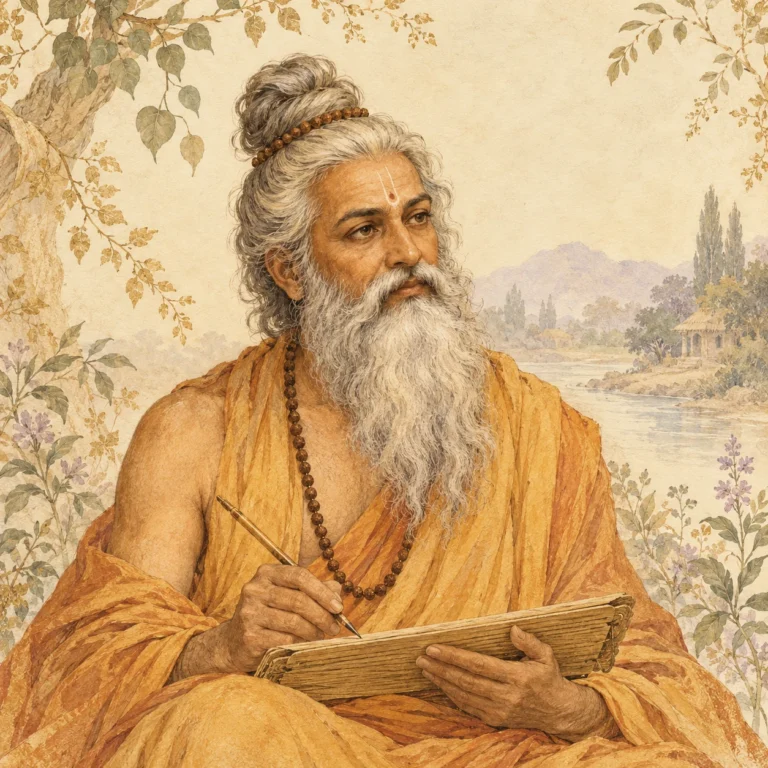
A literary legacy across generationsVintage artwork · artistic interpretation
Curated by Euonia PressLiterary heritage, open to everyone
THE CURATED BOOKSHELF
1 listedBooks & editions
Explore the work, discover editions, and join the reading journey.
संस्कृत (Sanskrit)Literary language
Ancient India · personal dates uncertainLife and literary setting
A continuing legacyRead the work, explore the sources
A life in literature
Valmiki is revered as the sage-poet traditionally credited with the Sanskrit रामायण (Ramayana, “The Journey of Rama”). The title आदिकवि (Adi Kavi, “first poet”) expresses his foundational place in a literary and religious tradition. It is an honorific, not a claim that modern historical research has identified the first person ever to compose poetry.
A poet within the story
The epic’s opening narrative presents Valmiki as the composer and shows the poem being taught to कुश (Kusha) and लव (Lava). Their singing carries the story to listeners. This framing gives the work a powerful image of literature moving from a teacher to performers and then into public memory.
What can we say about his lifetime?
A precise biography cannot be reconstructed with confidence. Birthplace traditions, hermitage associations and accounts of his transformation belong to the history of belief and reception; they should not be mistaken for independently dated records. This page leaves personal dates and numerical era fields blank. A proposed date for a layer of the Ramayana would not establish the lifespan of one author.
That uncertainty need not diminish a reader’s encounter with the work. It makes the distinction between literary tradition and historical evidence especially important. The story’s survival is visible in manuscripts, commentaries, performances and retellings even where its earliest circumstances remain elusive.
A world within the words
An epic made for return
The received Sanskrit Ramayana is conventionally described as approximately 24,000 verses across seven काण्ड (kanda, “books” or major divisions). Its story follows Rama, Sita and their companions through separation, exile, conflict and return. Different editions and textual traditions do not always contain identical readings or totals.
Many retellings, distinct authors
A reader should distinguish Valmiki’s Sanskrit epic from later Ramayana works in other languages. A shared story does not make every retelling a book written by Valmiki. When choosing an edition, look for the translator, language, source text and whether it is complete, abridged, adapted or intended for children.
The epic invites reflection on duty, loyalty, grief, power and the consequences of difficult choices. Readers and traditions interpret its characters differently. An introduction can welcome that range without presenting one modern interpretation as the only possible meaning.
- Language
- संस्कृत (Sanskrit)
- Cultural home
- Ancient South Asian literary tradition
- Estimated era
- Ancient India · personal dates uncertain
- Born
- Unknown
- Died
- Unknown
- Also known as
- आदिकवि (Adi Kavi, “first poet” in the Sanskrit tradition)
No securely established birth year, death year or lifespan. Dates proposed for the epic’s composition must not be presented as the author’s personal lifetime. Structured era remains unset.
Learn more about Euonia Spotlight



A little book magic
Discover Euonia’s book giveaways. Return for new chances to find your next favourite read.
Explore giveaways →
Learn more about Euonia Spotlight

Learn more about Euonia Spotlight

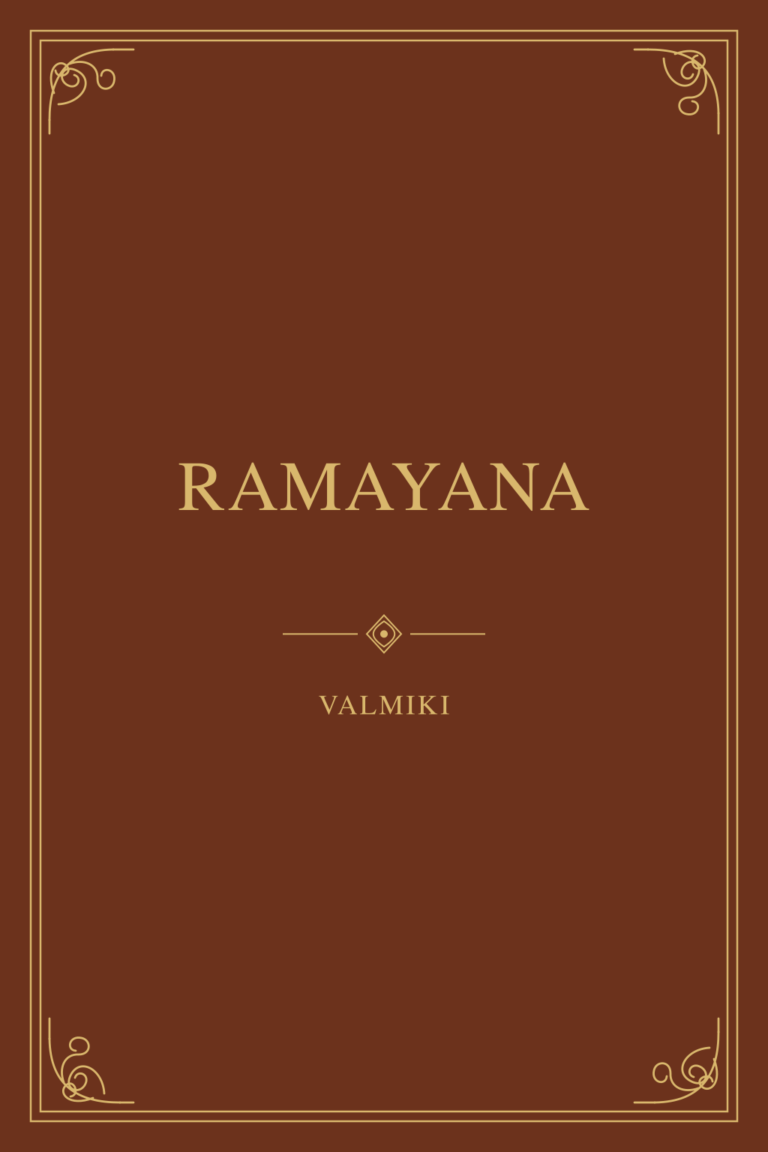
- रामायण (Ramayana, “The Journey of Rama”)
From manuscript to the world
Before a modern publishing date
There is no verified first-edition date, publisher’s address or original autograph that can safely be assigned to Valmiki. The epic’s own account emphasises composition and sung recitation. Its eventual textual history includes many generations of copying, teaching and commentary, rather than a single modern-style book launch.
What were the words written on?
Surviving Ramayana traditions include both palm-leaf and paper manuscripts. The British Library catalogues a Sanskrit Ayodhya Kanda manuscript on Indian paper; its endangered-archives collections also document palm-leaf copies. These are later witnesses to transmission. They do not establish the material on which Valmiki himself wrote, or prove that a particular object belonged to him.
From manuscript traditions to a digital text
The National Sanskrit University’s Ramayana project brings together the text, translations and commentaries, with technology support from IIT Kanpur. Readers can compare Sanskrit with explanatory material online. Digital access is a new stage in the work’s circulation, not evidence that every surviving version has a single uncontested wording.
A little book magic
Discover Euonia’s book giveaways. Return for new chances to find your next favourite read.
Explore giveaways →Learn more about Euonia Spotlight

Great literature survives because generations choose to carry it forward.
Remembered around the world
A landscape of remembrance
The Amritsar district administration describes Ram Tirath as a place associated by tradition with Valmiki’s hermitage and the upbringing of Lava and Kusha. Its value as a place of worship and cultural memory should be described on those terms. A traditional association does not, by itself, authenticate a historical residence or date.
Honour, rather than a modern prize list
Valmiki’s principal recognition is the reverence accorded to the sage and the continuing life of the Ramayana. Modern literary awards cannot be assigned retrospectively as achievements he personally received. The enduring honour is visible in the care given to the text: preservation, study, recitation and renewed interpretation.
A world open to readers
A richly illustrated edition can introduce the story, while a translated critical or scholarly edition can explain textual differences. Both can be valuable, provided their purpose is clear. The most rewarding approach is to ask what kind of Ramayana one is reading before treating every version as interchangeable.
Learn more about Euonia Spotlight


A little book magic
Discover Euonia’s book giveaways. Return for new chances to find your next favourite read.
Explore giveaways →Learn more about Euonia Spotlight
A continuing story
Origins · Personal dates remain uncertain.
Transmission · Recitation, manuscript copying and commentary carry the epic forward.
Today · University editions and digital projects make the work accessible across languages.
Words to carry with you
Read with a map of the work
Begin with the translator’s introduction and the contents. Note which of the seven major divisions are included. When a passage raises a question, compare its wording with another translation and check the notes before drawing a conclusion from one English term.
Listen as well as read
The framing story gives recitation a central place. Listening to a passage can reveal rhythm and repetition that silent reading may miss. Readers unfamiliar with Sanskrit can follow a translated explanation alongside it. Respect for the tradition and careful attention to evidence can strengthen one another.
Learn more about Euonia Spotlight

The Legendary Writers collection
Discover the lives, books and ideas that travel across generations.
Explore the collection ↗Sources & image credits
Explore the texts and institutions behind this profile.
- IIT Kanpur / Sanskrit University — Ramayana project ↗
- IIT Kanpur — Bala Kanda, Sarga 4: recitation of the epic ↗
- National Sanskrit University — Ramayana on Internet ↗
- Amritsar District — Ram Tirath ↗
- British Library — Ayodhya Kanda manuscript ↗
Original AI-generated vintage portrait commissioned for Euonia Press, October 2026. Artistic interpretation; not a photograph, authenticated likeness or historical document.
KEEP EXPLORING · WRITERS
Explore other legendary writers
Discover writers across different centuries, languages and traditions.
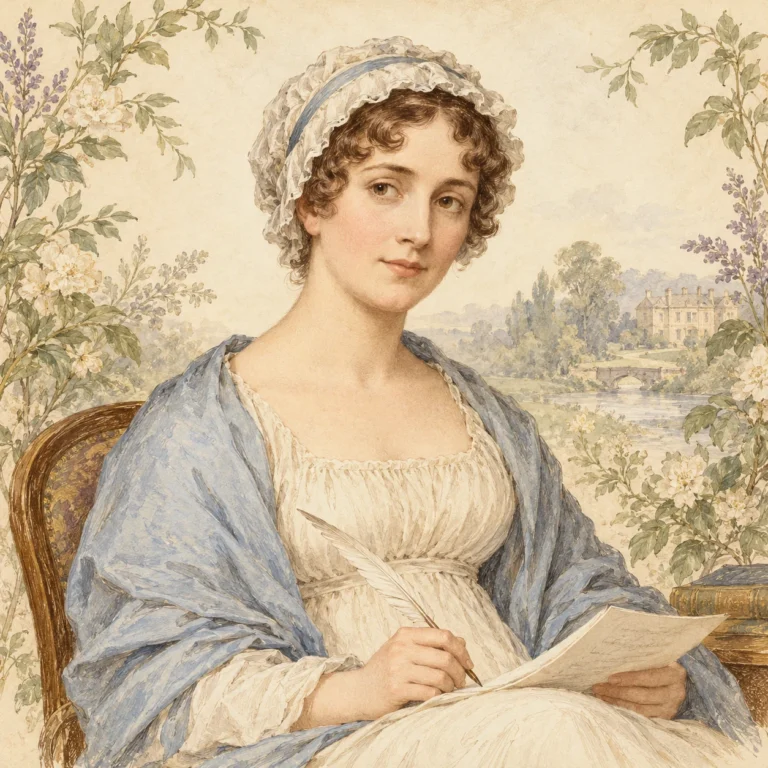 ◉ 3 views
English
Jane Austen
1775–1817 CE · Georgian and Regency Britain
Read the story ↗ ◉ 3 views
বাংলা (Bengali); English translations
Rabindranath Tagore
রবীন্দ্রনাথ ঠাকুর (Rabindranath Tagore)
1861–1941 CE · Modern Bengali literature
Read the story ↗ ◉ 7 views
தமிழ் (Tamil)
Thiruvalluvar
திருவள்ளுவர் (Thiruvalluvar)
Approx. 300 BCE–500 CE; dating disputed
Read the story ↗ ◉ 2 views
English
William Shakespeare
1564–1616 CE · English Renaissance
Read the story ↗KEEP EXPLORING · BOOKS
Find your next great read
Discover books from across the Euonia community.


Literary heritage belongs to every reader.
Curated by Euonia Press