21
Ramayana
Login to track your reading progress
Login Now
Login to track your reading progress
Login NowBook Description
The Ramayana follows a royal family whose private promises reshape the fate of a kingdom. Rama, prince of Ayodhya, is preparing to become king when obligations arising from his father's earlier word send him into fourteen years of exile. Sita chooses to accompany her husband, and Lakshmana joins them. Their departure carries the story from the ordered world of the palace into forests where hospitality, danger, loyalty and desire take new forms.
When Ravana, ruler of Lanka, abducts Sita, the epic expands into a search across unfamiliar lands. Rama's alliance with Sugriva and the extraordinary service of Hanuman connect the rescue to struggles beyond his own family. Sita's endurance in captivity gives the story a powerful centre of its own, while the choices of brothers, rulers, messengers and allies show how differently loyalty can be understood. The movement toward Lanka brings personal grief into contact with the public demands of leadership and war.
Traditionally attributed to Valmiki, this Sanskrit epic is concerned with dharma: the duties, responsibilities and ethical questions that shape a life. Those demands do not always align comfortably. A promise may wound a family; royal duty may conflict with love; loyalty to a relative may clash with the recognition that the relative is wrong. The narrative's force comes from watching characters act within these pressures, with consequences that reach far beyond a single decision.
The Ramayana offers adventure, vivid encounters and a sustained meditation on conduct. It is also a story of separation, steadfastness and the difficulty of returning to a world altered by suffering. Reading it as an epic allows its quieter human moments to stand beside its great journeys and battles. Rama, Sita, Lakshmana, Bharata and Hanuman embody different relationships to service and responsibility, inviting readers to consider what makes an action honourable and what its cost may be.
Spotlight Reviews
The New York Review of Books — on Arshia Sattar’s translation — 7 April 2022
Read the original source Quotation card — see the linked original source.
Meet the Characters
By Valmiki
Translated by: Arshia Sattar
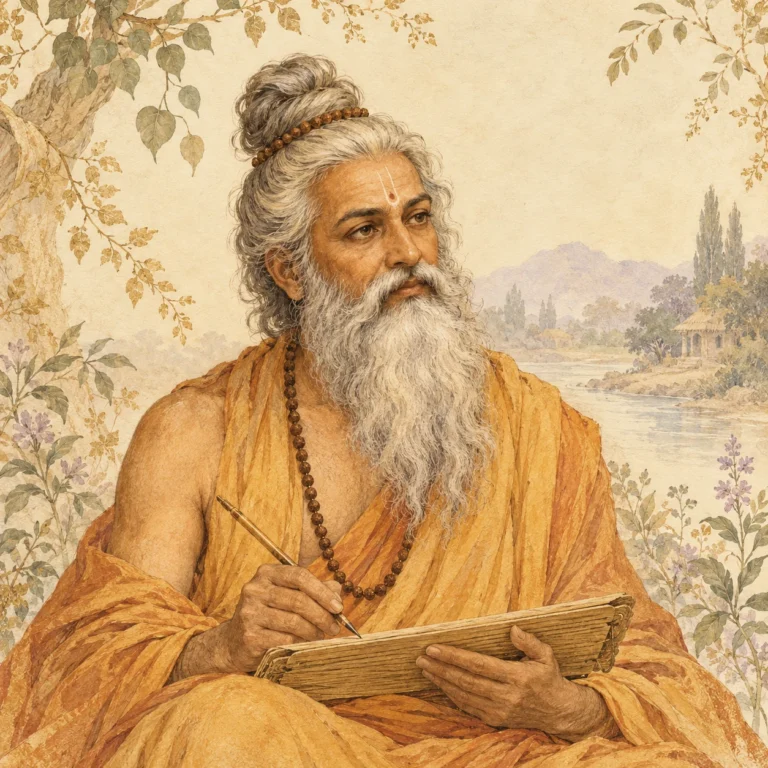
About the Author
Rate & Review This Book
Related Books
1330 மூலப் பாடல்களும் தெளிவான விளக்க உரையும்

Charts of the Forgotten Coast

Recipes from Twin Coastlines

Essays on Night Skies for Families

Test
You Might Also Like