




EUONIA PRESS · LEGENDARY WRITERS
Thiruvalluvar
திருவள்ளுவர் (Thiruvalluvar)
தமிழ் (Tamil) · Tamil literary tradition · South India
The Tamil poet behind 1,330 couplets on virtue, public life and love. Explore a literary legacy carried from palm-leaf manuscripts to readers around the world.
A literary legacy across generationsVintage artwork · artistic interpretation
Curated by Euonia PressLiterary heritage, open to everyone
THE CURATED BOOKSHELF
1 listedBooks & editions
Explore the work, discover editions, and join the reading journey.
தினம் ஒரு திருக்குறள்
Tamil couplets with English explanations · 1330 kurals in the collection.
தினம் ஒரு திருக்குறள்
DAILY THIRUKKURAL
குறள் 14 · வான்சிறப்பு
ஏரின் உழாஅர் உழவர் புயல்என்னும்வாரி வளங்குன்றிக் கால்.EXPLANATION
Farmers cannot continue their work when the rain that supports cultivation disappears. Skill and effort need favourable material conditions; hardship is not always a failure of willingness.
IN EVERYDAY LIFE
Support a local farmer or grower when possible. Before judging someone's results, consider the resources available to them.
Explanation & everyday-life reflection: Euonia Press
✦ EUONIA PRESS ✦

Text sources and credits
Original Tamil verses: Thiruvalluvar (public domain). All 1,330 entries contain newly written Euonia Press English explanations and contemporary everyday-life reflections. These are interpretive notes, not literal translations or additional words by Thiruvalluvar. Historical sources were consulted to check meanings; no historical English commentary is displayed in this collection.
Historical meaning reference: Project Madurai, e-text 0153. Tamil text and chapter metadata: tk120404/Thirukkural (Apache 2.0). Illustrations are artistic interpretations.
1,330Couplets
133Chapters
3Great divisions
தமிழ்Tamil · original language
A life in literature
A poet can leave a monument without building in stone. Thiruvalluvar’s is a work of extraordinary compression: two lines at a time, opening onto the vast questions of how to live.
திருவள்ளுவர் (Thiruvalluvar), also known as Valluvar, is the Tamil poet and thinker traditionally credited with திருக்குறள் (Tirukkural, “Sacred Couplets”). His literary world includes affection, friendship, public responsibility, learning, poverty, integrity and love. Readers encounter a voice that can move from the conduct of a ruler to the hurt caused by a careless word.
When did he live?
His birth, death and precise lifetime are not securely established. Proposed dates for the work range broadly from around the 3rd century BCE to the 5th century CE. The Sahitya Akademi monograph by S. Maharajan favours an early estimate, between the 3rd and 1st centuries BCE; other scholarship places the text in the early centuries CE or around the 5th century. This profile therefore uses approximately 300 BCE–500 CE as a broad dating window, not as the length of one person’s life.
Reading ancient dates: BCE means “Before the Common Era”; CE means “Common Era.” Neither an exact birthday nor an age at death can responsibly be calculated from this range. Different historical interpretations remain part of the study of the work.
The person behind the tradition
Later traditions associate him with மயிலாப்பூர் (Mylapore, now part of Chennai), describe him as a weaver and name வாசுகி (Vasuki) as his wife. Such stories are important to his cultural memory, but should not be treated as a contemporary documentary biography. His precise birthplace, occupation and religious affiliation remain debated.
For a reader meeting him for the first time, the most rewarding introduction is the surviving work itself. Its attention moves between the individual and society: how a person learns, speaks and cares; how friendship is tested; how power ought to be exercised; and how desire transforms the inner life.
A world wider than one lifetime
Across this broad dating window, other literary voices include the Roman philosopher Marcus Aurelius (121–180 CE), whose Meditations examines conduct and self-discipline, and the Sanskrit poet காளிதாசர் (Kalidasa, approximately 4th–5th century CE), celebrated for drama and poetry. These are useful comparisons across literary cultures, not evidence of contact or proven contemporaneity. As comparable writers enter the Euonia collection, their published profiles appear in the linked era section below.
Historical context: Sahitya Akademi, S. Maharajan’s Tiruvalluvar; overview of the dating debate and its scholarly references. Comparative reading: Marcus Aurelius; Kalidasa: Life and Works.
A world within the words
One work. Three great movements. A thousand ways to return to the question of a good life.
The திருக்குறள் (Tirukkural) contains 1,330 couplets in 133 chapters, with ten couplets in each chapter. Its three divisions belong to a single work; they are not three separate books independently authored by Valluvar. Later translations, commentaries and selections are editions or interpretations of that work.
38 CHAPTERS · 380 COUPLETSஅறத்துப்பால்
அறத்துப்பால்
(Virtue)
How should a person live? The first division considers moral conduct, compassion, hospitality, gratitude, restraint and the responsibilities of domestic life.
70 CHAPTERS · 700 COUPLETSபொருட்பால்
பொருட்பால்
(Wealth & public life)
How should people live together? Here are reflections on government, counsel, justice, learning, friendship, work and the conditions of a flourishing society.
25 CHAPTERS · 250 COUPLETSகாமத்துப்பால்
காமத்துப்பால்
(Love)
What does love feel like from within? This division, also called இன்பத்துப்பால் (the division of love or pleasure), follows attraction, union, separation, longing and reconciliation.
How did he compose it?
The work is composed in குறள் வெண்பா (kural venba, a compact Tamil verse form). A couplet has two lines arranged in four metrical units followed by three. These are units of poetic rhythm, not simply seven English-style words. The restricted form gives comparisons, contrasts and images unusual force: little space is available, so each choice matters.
We can study the finished poetry, but no verified writing diary tells us his daily routine, the sequence in which he composed individual verses, or how many years composition took. The craft is visible in the text; the private working process is largely lost.
Why readers return
The book makes room for the intimate and the public. A verse about hurtful speech can speak to a family conversation; a chapter about listening can challenge a leader; a love poem can turn absence into an entire emotional landscape. These are Euonia’s reading observations, offered as invitations to explore the text rather than as a claim that every reader must interpret it alike.
The work also sustains a conversation between generations of commentators. மணக்குடவர் (Manakkudavar) and பரிமேலழகர் (Parimelazhagar) are among the commentators whose readings can be explored through the Tamil Virtual Academy. Comparing explanations reveals how much thought a small couplet can hold.
From Tamil to many reading worlds
Translation brings the work to readers who cannot yet read Tamil. The Central Institute of Classical Tamil’s publication catalogue includes editions and translations in multiple languages. A translation can open a door; the original metre, wordplay and range of meanings still reward reading beside a commentary. This is why Euonia distinguishes the original author from an edition’s translator, commentator or editor.
Read the Tamil text and commentaries at the Tamil Virtual Academy, the Project Madurai text, and CICT’s publication catalogue.
- Language
- தமிழ் (Tamil)
- Cultural home
- Tamil literary tradition · South India
- Estimated era
- Approx. 300 BCE–500 CE; dating disputed
- Born
- Unknown; estimates differ
- Died
- Unknown; age at death unverified
- Also known as
- Tiruvalluvar, Valluvar
The era spans competing estimates for the work, not an 800-year lifespan. It supports broad literary comparisons, not a claim of exact contemporaneity.
Learn more about Euonia Spotlight




A little book magic
Discover Euonia’s book giveaways. Return for new chances to find your next favourite read.
Explore giveaways →Learn more about Euonia Spotlight



The Cartographer’s Tea House
At a quiet tea house between two cities, every cup comes with a map. A young cartographer…
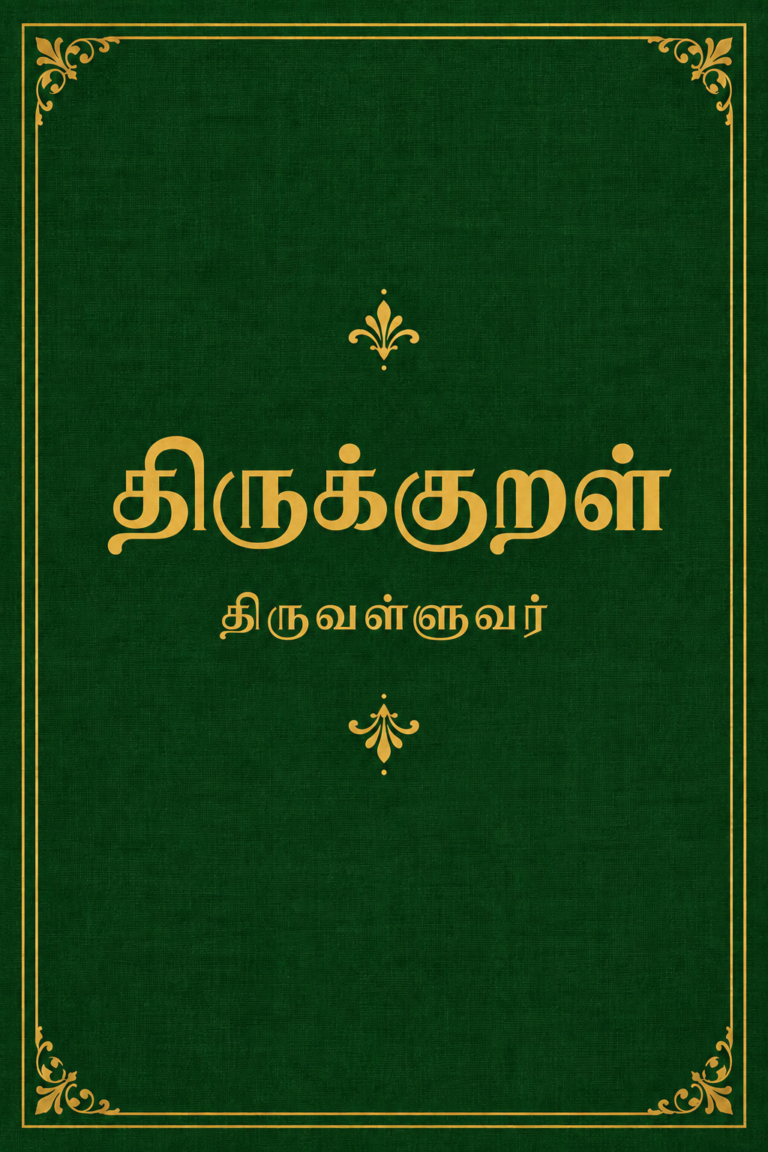
- திருக்குறள் (Tirukkural — Sacred Couplets)
From manuscript to the world
Long before a printed cover or a modern publisher’s imprint, a literary work could travel through recitation, teaching, copying and commentary. Understanding that journey helps us appreciate not only Valluvar’s poetry, but the labour of the people who preserved it.
On what material was it written?
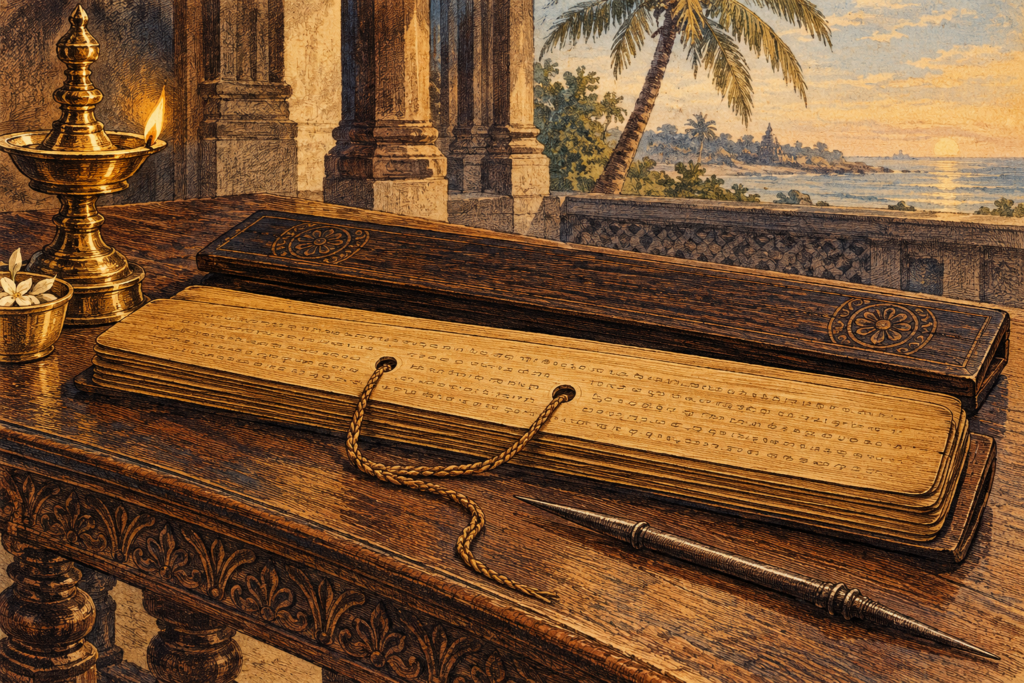
The Tirukkural survives through a manuscript tradition that includes ஓலைச்சுவடிகள் (palm-leaf manuscripts). Prepared leaves could be inscribed with a pointed metal stylus; a dark substance made the incisions legible. Holes and cords held leaves together, often between protective wooden boards. The materials were vulnerable to wear and environmental damage, so preservation depended on care and copying.
This describes the manuscript medium, not an eyewitness account of Valluvar at work. No authenticated autograph manuscript in his own hand is identified in the sources used for this profile. His personal stylus, original writing surface and first complete copy cannot therefore be specified as established facts.
Where did he first present or “publish” it?
A later legend places the work before the தமிழ்ச் சங்கம் (Tamil literary academy) at மதுரை (Madurai). This is a story of literary recognition, not a surviving publication record. We do not know a verified venue or date for its first public recitation. Applying a modern publisher-and-release-date model to its original composition would be misleading.
From manuscripts to a printed book
A surviving title page documents an 1812 printed edition in Madras (present-day Chennai), commonly identified as the first known printed edition of the Tirukkural. It appeared many centuries after the poet’s proposed lifetime. This is a milestone in the history of the text’s transmission, not the date Valluvar wrote it or personally published it.
Today readers can compare digitised texts, translations and manuscript records. The preservation story continues: a verse survives because someone memorises it, someone copies it, someone edits it carefully, and another reader chooses to begin.
Material history: Cornell University Library’s palm-leaf preservation guide. Manuscript evidence: CICT Digital Archives. Print evidence: the 1812 Madras title page. The Madurai tradition is discussed in the Sahitya Akademi monograph.
A little book magic
Discover Euonia’s book giveaways. Return for new chances to find your next favourite read.
Explore giveaways →Learn more about Euonia Spotlight
Great literature survives because generations choose to carry it forward.
THE ILLUSTRATED COLLECTION
A legacy you can see
Places, memory and the world of the writer

Remembered around the world
From a granite chariot in Chennai to a statue facing the sea, the poetry has become part of the landscape.
These monuments and institutions are later tributes to Thiruvalluvar. They celebrate his legacy; they are not awards he personally received, and their images do not establish his historical appearance.
வள்ளுவர் கோட்டம் (Valluvar Kottam)
Chennai, India
Built in 1975–76, Valluvar Kottam gives literary memory an architectural form. Its great stone chariot, approximately 39 metres high, contains an image of the poet. Architect and sculptor V. Ganapati Sthapati guided the design.
The experience extends beyond the chariot. All 1,330 couplets are engraved on granite in the corridors around the auditorium. A work encountered on a page becomes something a visitor can move through. It is a public literary memorial, not a museum of authenticated belongings from the poet’s lifetime.
Explore the monument with Chennai District.
திருவள்ளுவர் சிலை (Thiruvalluvar Statue)
Kanniyakumari, India
Standing on an offshore rock beside the Vivekananda Rock Memorial, this monumental figure was dedicated on 1 January 2000. Sculptor V. Ganapathi Sthapathi translated the book’s structure into an architectural symbol.
The total height is 133 feet (about 41 metres), recalling the work’s 133 chapters. The 38-foot pedestal represents the 38 chapters on virtue; the 95-foot figure above it represents the remaining divisions, wealth and love. The symbolism gives the monument its intellectual foundation: the other pursuits of life stand upon virtue. Against the sea, that relationship becomes visible at a scale no printed page can offer.
Read the official Kanniyakumari District account.
திருவள்ளுவர் விருது (Thiruvalluvar Award)
Tamil Nadu, India
The Government of Tamil Nadu presents the Thiruvalluvar Award among its literary honours. திருவள்ளுவர் நாள் (Thiruvalluvar Day) provides a public occasion for remembrance, and the Thiruvalluvar year is used in official proceedings. These forms of recognition place his name in the continuing civic and literary life of Tamil Nadu.
Tamil Development Department information.
A poet on a London campus
United Kingdom
At SOAS University of London, a bronze statue makes his presence part of an international setting for language and cultural study. Donated by the Government of Tamil Nadu, it was unveiled in 1996 by Indian High Commissioner Dr L. M. Singhvi. A visitor encounters Tamil literary heritage within the everyday life of a London university.
A monument in Cergy
France
A statue inaugurated in Cergy in December 2023 brought another expression of remembrance to France. The Indian Prime Minister’s Office recorded the inauguration and welcomed the cultural bond it represented. The memorial is one more point on an international map of readers, communities and institutions carrying Valluvar’s name.
Prime Minister’s Office announcement.
யாழ்ப்பாணம் திருவள்ளுவர் பண்பாட்டு மையம்
(Jaffna Thiruvalluvar Cultural Centre)
Sri Lanka
Built with Government of India grant assistance and dedicated to the people of Sri Lanka in February 2023, the centre includes a two-storey museum, a 600-seat auditorium, a learning tower and an amphitheatre. A governing trust was established in September 2026 to support its sustained operation.
The centre connects his name with cultural learning and performance. Its museum belongs to that wider cultural complex; this profile does not claim that it displays verified personal possessions of the ancient poet.
Learn more about Euonia Spotlight


A little book magic
Discover Euonia’s book giveaways. Return for new chances to find your next favourite read.
Explore giveaways →Learn more about Euonia Spotlight

A continuing story
- Ancient Tamil worldComposition date disputed; an enduring literary tradition begins.
- 1812Known printed edition in Madras (Chennai).
- 1975–76Valluvar Kottam built in Chennai.
- 1996SOAS statue unveiled in London.
- 2000Kanniyakumari statue dedicated.
- 2023Cergy statue inaugurated; Jaffna cultural centre dedicated.
Words to carry with you
Begin with one couplet. Read it aloud, consider the image, and ask where the thought meets your own life. The English renderings below are original explanatory translations prepared for this profile; they do not reproduce a modern translator’s edition.
எப்பொருள் யார்யார்வாய்க் கேட்பினும் அப்பொருள்
மெய்ப்பொருள் காண்பது அறிவு.(Whatever you hear, whoever speaks it, wisdom is to discern the truth within it.)
திருக்குறள் (Tirukkural), couplet 423 · அறிவுடைமை (Possession of wisdom)
A thought to explore: Can we assess an idea by its truth rather than by the status of the person presenting it? This reading offers a starting point for reflection, not a substitute for the full chapter and its commentaries.
தீயினாற் சுட்டபுண் உள்ளாறும் ஆறாதே
நாவினாற் சுட்ட வடு.(A wound burned by fire may heal within; the scar burned by the tongue does not.)
திருக்குறள் (Tirukkural), couplet 129 · அடக்கமுடைமை (Self-restraint)
A thought to explore: Valluvar gives speech a physical consequence: a wound and a scar. That image invites us to consider the lasting effects of words in a home, a workplace or a public conversation.
A first reading route
Start with a theme you recognise, such as learning, friendship or kindness in speech. Read all ten couplets in its chapter. Compare a translation with a commentary, then return to the Tamil if you can. The love division deserves its own attentive reading: it changes the emotional register of the work and is more than an appendix to its moral reflections.
Continue with the Tamil Virtual Academy’s text and commentaries.

Alice
Give the full complete book form by updating these three- 1. Add a new section for Tags…
The Legendary Writers collection
Discover the lives, books and ideas that travel across generations.
Explore the collection ↗Sources & image credits
Explore the texts and institutions behind this profile.
- Tamil Virtual Academy — திருக்குறள் (Tirukkural), text and commentaries ↗
- Sahitya Akademi — S. Maharajan, Tiruvalluvar (historical interpretation and traditions) ↗
- Thiruvalluvar — overview of dating debate with scholarly references ↗
- Project Madurai — திருக்குறள் (Tirukkural), Tamil text ↗
- Central Institute of Classical Tamil — publications and translations ↗
- Cornell University Library — palm-leaf manuscripts ↗
- CICT — Digital Archives of Tamil manuscripts ↗
- 1812 Madras edition — preserved title page ↗
- Chennai District — வள்ளுவர் கோட்டம் (Valluvar Kottam) ↗
- Kanniyakumari District — திருவள்ளுவர் சிலை (Thiruvalluvar Statue) ↗
- Tamil Nadu Government — award, commemorative day and official year ↗
- SOAS University of London — campus statue ↗
- Prime Minister’s Office — Cergy statue, France ↗
- High Commission of India — Jaffna Thiruvalluvar Cultural Centre ↗
- Online Library of Liberty — Kalidasa, Life and Works ↗
- Marcus Aurelius — dates and historical overview ↗
Portrait, Kanniyakumari statue, Valluvar Kottam and palm-leaf artwork: original AI-generated vintage illustrations created for Euonia Press. They are artistic interpretations, not historical photographs, measured architectural records or authenticated objects from the poet’s life. The traditional portrait does not establish his historical appearance.
Tamil couplets are from the public-domain original work. English renderings in the reading section are original editorial translations. Names and local-language terms are accompanied by English transliterations or meanings. Sources reviewed October 2026.
KEEP EXPLORING · WRITERS
Explore other legendary writers
Discover writers across different centuries, languages and traditions.
 ◉ 3 views
English
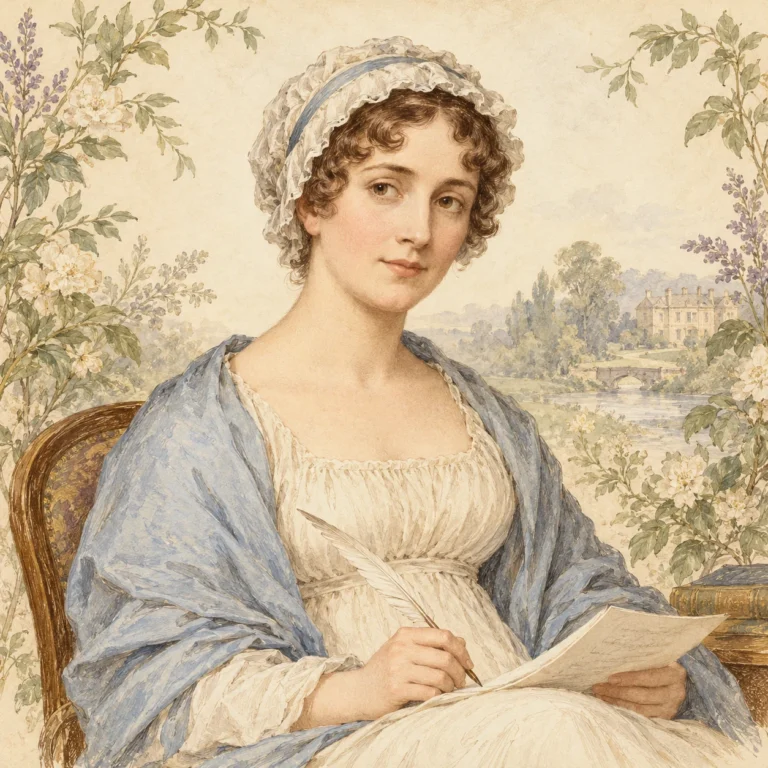
Jane Austen
1775–1817 CE · Georgian and Regency Britain
Read the story ↗ ◉ 3 views
বাংলা (Bengali); English translations
Rabindranath Tagore
রবীন্দ্রনাথ ঠাকুর (Rabindranath Tagore)
1861–1941 CE · Modern Bengali literature
Read the story ↗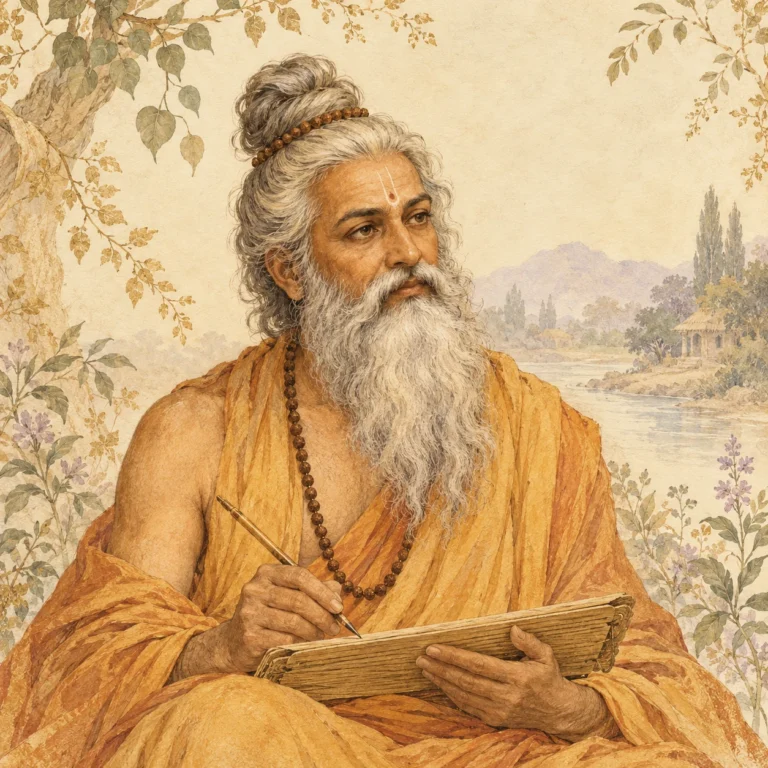 ◉ 2 views
संस्कृत (Sanskrit)
Valmiki
वाल्मीकि (Valmiki)
Ancient India · personal dates uncertain
Read the story ↗ ◉ 2 views
English
William Shakespeare
1564–1616 CE · English Renaissance
Read the story ↗KEEP EXPLORING · BOOKS
Find your next great read
Discover books from across the Euonia community.



Literary heritage belongs to every reader.
Curated by Euonia Press