


EUONIA PRESS · LEGENDARY WRITERS
William Shakespeare
English · Stratford-upon-Avon and London, England
A poet of desire, a dramatist of power and a theatre-maker whose characters still speak to the world. Discover the journey from Stratford-upon-Avon to the living stage.
A literary legacy across generationsVintage artwork · artistic interpretation
Curated by Euonia PressLiterary heritage, open to everyone
THE CURATED BOOKSHELF
2 listedBooks & editions
Explore the work, discover editions, and join the reading journey.

EnglishLiterary language
1564–1616 CE · English RenaissanceLife and literary setting
A continuing legacyRead the work, explore the sources
A life in literature
William Shakespeare grew up in Stratford-upon-Avon and built a working life in London’s theatre. His documented career combines several identities: actor, playwright, poet and shareholder in a theatrical company. By 1592 he was established enough in London to attract a fellow writer’s hostile attention. He later belonged to the Lord Chamberlain’s Men, the company that became the King’s Men under James I in 1603.
A life between town and stage
His career belongs to the reigns of Elizabeth I and James I. Stratford remained important: he bought New Place there in 1597 and died in 1616. The surviving evidence records family events, property and theatrical business more readily than private thoughts. A careful biography therefore distinguishes documents from the appealing stories that later generations attached to his name.
Why the characters endure
To read Shakespeare is to meet people changing their minds in public. A lover turns hesitation into poetry; a ruler mistakes obedience for loyalty; a joke opens a dangerous truth. His plays let competing voices occupy the same room without giving every question an easy answer. That dramatic openness offers each generation of readers and performers room to discover its own concerns.
A world within the words
Comedy, history, tragedy—and intimate poetry
The First Folio organised his plays into comedies, histories and tragedies. These categories offer useful entrances, but individual works repeatedly cross emotional boundaries. A comedy can examine cruelty; a history can expose the fragility of authority; a tragedy can contain startling humour.
For a first encounter, try a staged scene before a complete play. Follow the changing relationship between speakers, then return to the language on the page. His poems invite a different pace: a sonnet can be read slowly enough for its argument to turn between opening proposition and closing couplet.
- Language
- English
- Cultural home
- Stratford-upon-Avon and London, England
- Estimated era
- 1564–1616 CE · English Renaissance
- Born
- 1564; exact day unconfirmed
- Died
- 23 April 1616
- Also known as
- The Bard of Avon
Baptised on 26 April 1564. The customary birthday of 23 April is a tradition, not a surviving birth record. He lived about 52 years.
Learn more about Euonia Spotlight


A little book magic
Discover Euonia’s book giveaways. Return for new chances to find your next favourite read.
Explore giveaways →

Trollhunter
Scepters of Empyrea is a fantasy-adventure novel by Vignesh Ravichandran, blending archaeology, history, and sci-fi as American…
Learn more about Euonia Spotlight

- Hamlet
- Macbeth
- King Lear
- Romeo and Juliet
- A Midsummer Night’s Dream
- Sonnets
From manuscript to the world
Written for voices, bodies and audiences
Shakespeare’s plays circulated through the practical world of actors, rehearsals and performance before becoming the books familiar today. We should not picture every printed edition as a manuscript personally prepared by its author. Surviving early editions are witnesses to a complicated theatrical and printing history.
From separate playbooks to the First Folio
During his lifetime, many plays appeared in London as quartos: relatively small books made by folding printed sheets twice. In 1623, seven years after his death, fellow actors John Heminges and Henry Condell assembled 36 plays in the First Folio. Eighteen had not previously appeared in print, including Macbeth and The Tempest. Their preservation is one reason that publication became a landmark.
What survives—and what does not
A printed page is not the same thing as an author’s original handwriting. This profile does not claim that a particular displayed quill, desk or manuscript was used to compose these plays. The Folger’s digitised early editions let readers compare the surviving printed evidence directly. Reading across versions can reveal why modern editors sometimes make different choices.
A little book magic
Discover Euonia’s book giveaways. Return for new chances to find your next favourite read.
Explore giveaways →
Sense and Sensibility
When the Dashwood sisters lose their father, they also lose the security of the home around which…
Great literature survives because generations choose to carry it forward.
Remembered around the world
A heritage preserved in several countries
The Shakespeare Birthplace Trust cares for the story of his life in Stratford-upon-Avon. Across the Atlantic, the Folger Shakespeare Library in Washington, DC preserves and makes accessible a major collection of early Shakespeare editions. Its First Folio collection gives an international audience access to books that might otherwise remain distant museum objects.
Recognition beyond a lifetime
Modern literary prizes should not be presented as awards Shakespeare received. His recognition is better understood through the preservation, performance, translation and study of his work. Each new production is also an interpretation: costume, accent, casting and setting change how familiar words reach an audience.
Meet the surviving evidence
Shakespeare Documented brings together records connected with his life and career. The project offers an especially valuable companion to a legendary reputation: it lets readers look beyond famous anecdotes to the documentary traces on which historians depend.
Learn more about Euonia Spotlight


A little book magic
Discover Euonia’s book giveaways. Return for new chances to find your next favourite read.
Explore giveaways →Learn more about Euonia Spotlight

A continuing story
1564 · Baptism recorded in Stratford.
1592 · Documentary evidence of a London theatrical career.
1616 · Death in Stratford.
1623 · First Folio published.
Words to carry with you
Begin with a question
Choose one scene and ask what each character wants from the other. Read it aloud, pausing where a thought changes rather than automatically stopping at every line ending. Then watch another interpretation. Differences in tone can make a sentence sound affectionate, fearful or threatening without changing its words.
A reading path
For imagination and comic confusion, begin with A Midsummer Night’s Dream. For a concentrated study of ambition, try Macbeth. Hamlet rewards attention to uncertainty and performance; King Lear confronts love, authority and recognition. These are reading suggestions rather than a ranking of the plays.
Learn more about Euonia Spotlight

The Legendary Writers collection
Discover the lives, books and ideas that travel across generations.
Explore the collection ↗Sources & image credits
Explore the texts and institutions behind this profile.
- Folger Shakespeare Library — Shakespeare’s life ↗
- Shakespeare Birthplace Trust — Biography ↗
- Folger Shakespeare Library — First Folio ↗
- Folger Shakespeare Library — Publishing Shakespeare ↗
- Shakespeare Documented — Timeline ↗
Original AI-generated vintage portrait commissioned for Euonia Press, October 2026. Artistic interpretation; not a photograph, authenticated likeness or historical document.
KEEP EXPLORING · WRITERS
Explore other legendary writers
Discover writers across different centuries, languages and traditions.
 ◉ 3 views
English
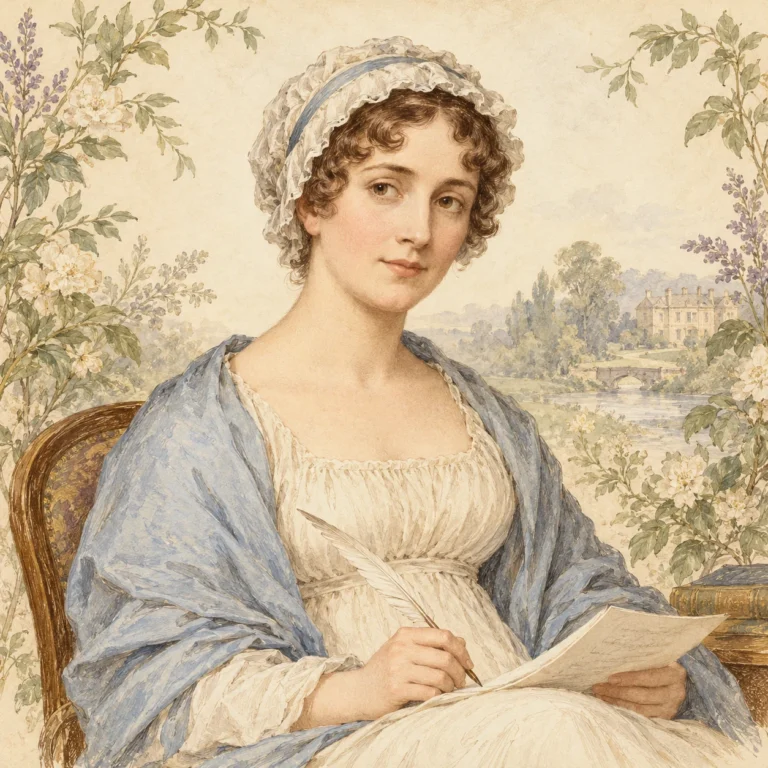
Jane Austen
1775–1817 CE · Georgian and Regency Britain
Read the story ↗ ◉ 3 views
বাংলা (Bengali); English translations
Rabindranath Tagore
রবীন্দ্রনাথ ঠাকুর (Rabindranath Tagore)
1861–1941 CE · Modern Bengali literature
Read the story ↗ ◉ 7 views
தமிழ் (Tamil)
Thiruvalluvar
திருவள்ளுவர் (Thiruvalluvar)
Approx. 300 BCE–500 CE; dating disputed
Read the story ↗ ◉ 2 views
संस्कृत (Sanskrit)
Valmiki
वाल्मीकि (Valmiki)
Ancient India · personal dates uncertain
Read the story ↗KEEP EXPLORING · BOOKS
Find your next great read
Discover books from across the Euonia community.

Literary heritage belongs to every reader.
Curated by Euonia Press