Book Review of Thinking, Fast and Slow by Daniel Kahneman
1. Book Information
- Title: Thinking, Fast and Slow
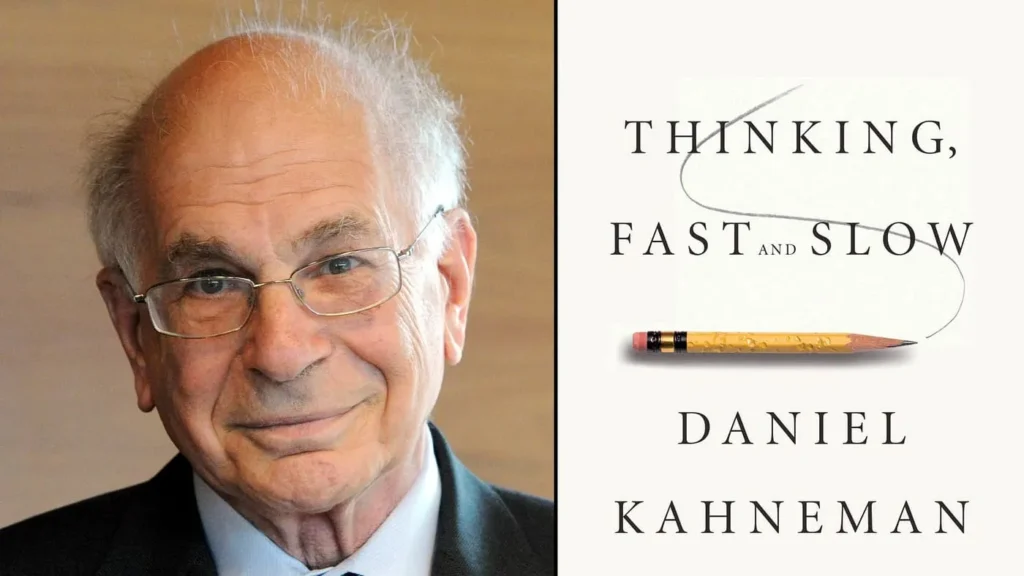
- Author: Daniel Kahneman
- First Published: October 25, 2011
- Publisher: Farrar, Straus and Giroux
- Genre: Psychology, Behavioral Economics, Decision-Making, Non-fiction
- Pages: Approximately 512 pages
- Reading Level: Advanced
- Average Reading Time: 15–20 hours
- ISBN: 978-0374533557
2. Quick Summary
Thinking, Fast and Slow is one of the most influential books ever written on human psychology and decision-making. Written by Nobel Prize-winning psychologist Daniel Kahneman, the book explains why people often make irrational decisions despite believing they are thinking logically.
The central idea revolves around two distinct modes of thinking that shape every decision we make. System 1 is fast, intuitive, emotional, and automatic. It allows us to make quick judgments without much effort. System 2, on the other hand, is slow, deliberate, analytical, and requires conscious mental effort.
Throughout the book, Kahneman demonstrates how these two systems interact and why our minds are surprisingly vulnerable to biases, overconfidence, stereotypes, and flawed reasoning. Using decades of psychological research and real-world examples, he explains why investors lose money, why first impressions can be misleading, why experts sometimes make poor predictions, and why humans frequently misjudge probabilities and risks.
Rather than teaching readers to distrust intuition entirely, Kahneman encourages greater awareness of our mental shortcuts. By recognizing common cognitive biases, readers can make better decisions in business, finance, relationships, and everyday life.
This book fundamentally changes the way readers understand how the human mind works.
3. About the Author
Daniel Kahneman (1934–2024) was an Israeli-American psychologist and Nobel Prize laureate in Economic Sciences. Although not an economist by training, his pioneering research with Amos Tversky revolutionized behavioral economics by demonstrating that human decisions are often influenced by predictable psychological biases rather than pure logic.
His work has transformed fields such as economics, marketing, medicine, law, finance, and public policy.
4. What Makes This Book Special?
Unlike traditional psychology books, Thinking, Fast and Slow combines scientific research with engaging storytelling and practical examples.
The book explains why intelligent people make poor decisions—not because they lack intelligence, but because the human brain naturally relies on shortcuts that are efficient yet imperfect.
Its concepts have influenced CEOs, policymakers, investors, educators, marketers, and psychologists around the world.
5. Core Concept
The central message of the book is:
Our minds operate through two systems of thinking, and understanding when to rely on each can dramatically improve our decisions.
System 1 is fast and intuitive.
System 2 is slow and analytical.
Many of our mistakes occur when we allow System 1 to answer questions that require careful System 2 thinking.
6. Main Lessons from the Book
Lesson 1: Two Systems Drive Every Decision
System 1
- Fast
- Automatic
- Emotional
- Intuitive
- Requires little effort
Examples:
- Reading facial expressions
- Driving a familiar route
- Answering “2 + 2”
System 2
- Slow
- Logical
- Deliberate
- Analytical
- Requires concentration
Examples:
- Solving difficult math problems
- Planning investments
- Evaluating contracts
- Making important career decisions
Lesson 2: We Are More Biased Than We Think
Our brains rely on mental shortcuts called heuristics.
While useful, these shortcuts often lead to systematic errors known as cognitive biases.
Some common biases include:
- Confirmation Bias
- Anchoring Bias
- Availability Bias
- Halo Effect
- Loss Aversion
- Overconfidence Bias
Recognizing these biases helps us make more objective decisions.
Lesson 3: Losses Hurt More Than Gains Feel Good
One of Kahneman’s most famous discoveries is Loss Aversion.
People experience the pain of losing ₹1,000 much more intensely than the happiness of gaining ₹1,000.
This explains why investors hold onto losing stocks too long and why people avoid necessary risks.
Lesson 4: Confidence Doesn’t Equal Accuracy
Confident people are not always correct.
Experts often overestimate their knowledge and underestimate uncertainty.
The book encourages humility when making predictions.
Lesson 5: First Impressions Can Be Misleading
System 1 rapidly forms opinions based on limited information.
These snap judgments influence hiring decisions, friendships, investments, and purchasing behavior—even when they are inaccurate.
Learning to pause and question first impressions can improve judgment.
7. Best Chapters
Two Systems
Introduces the book’s foundational idea and explains how fast and slow thinking work together.
Rating: ★★★★★
Heuristics and Biases
Explores the mental shortcuts that influence everyday decisions.
Rating: ★★★★★
Overconfidence
A fascinating chapter explaining why experts frequently make incorrect predictions.
Rating: ★★★★★
Choices
Examines how people evaluate gains, losses, and risk, introducing Prospect Theory.
Rating: ★★★★★
8. Practical Ideas You Can Apply Today
- Pause before making important financial decisions.
- Double-check your first impressions during interviews.
- Avoid making decisions while emotional.
- Seek opinions that challenge your existing beliefs.
- Base decisions on evidence rather than assumptions.
- Think statistically instead of relying solely on anecdotes.
- Create checklists for important decisions to reduce bias.
9. Memorable Quotes
“Nothing in life is as important as you think it is while you are thinking about it.”
“We can be blind to the obvious, and we are also blind to our blindness.”
“A reliable way to make people believe in falsehoods is frequent repetition.”
10. Strengths
✅ Groundbreaking psychological research
✅ Practical applications for everyday life
✅ Improves critical thinking
✅ Rich with real-world examples
✅ Influential across multiple disciplines
✅ Challenges readers to rethink decision-making
11. Weaknesses
- Dense and information-heavy.
- Some chapters repeat similar experiments.
- Requires careful reading and reflection.
- Less suitable for readers seeking quick self-help advice.
- Academic style may feel slow at times.
12. Who Should Read This Book?
Ideal for:
- Business leaders
- Entrepreneurs
- Investors
- Students
- Psychologists
- Marketers
- Financial professionals
- Decision-makers
- Anyone interested in understanding human behavior
Not ideal for:
- Readers looking for light, motivational reading.
- Beginners who prefer simple self-help books.
13. Key Takeaways
- The brain uses two systems for thinking.
- Fast thinking is useful but prone to errors.
- Slow thinking produces better decisions in complex situations.
- Cognitive biases affect everyone.
- Awareness of biases improves judgment.
- Losses influence human behavior more than equivalent gains.
- Rational decision-making requires conscious effort.
14. Overall Rating
| Category | Rating |
|---|---|
| Readability | ⭐⭐⭐⭐☆ (4/5) |
| Psychological Insight | ⭐⭐⭐⭐⭐ (5/5) |
| Practical Value | ⭐⭐⭐⭐⭐ (5/5) |
| Scientific Foundation | ⭐⭐⭐⭐⭐ (5/5) |
| Re-read Value | ⭐⭐⭐⭐⭐ (5/5) |
| Overall | ⭐⭐⭐⭐⭐ 4.9/5 |
15. Awards & Recognition
- Winner of the 2011 Los Angeles Times Book Prize.
- Written by the recipient of the 2002 Nobel Memorial Prize in Economic Sciences.
- Frequently included in lists of the best psychology, behavioral economics, and business books.
- Recommended reading by leading universities, business schools, and global organizations.
16. Where to Buy
- Amazon India
- Farrar, Straus and Giroux (Publisher)
- Barnes & Noble
- Bookshop.org
- Local independent bookstores
17. Similar Books You May Enjoy
If you enjoyed Thinking, Fast and Slow, consider reading:
- Nudge – Richard H. Thaler & Cass R. Sunstein
- Predictably Irrational – Dan Ariely
- Influence – Robert B. Cialdini
- The Psychology of Money – Morgan Housel
- The Undoing Project – Michael Lewis
18. Final Verdict
Thinking, Fast and Slow is a landmark work that fundamentally changes how readers understand the human mind. Daniel Kahneman presents decades of research in an accessible way, revealing that many of our everyday decisions are influenced by unconscious biases and mental shortcuts.
While the book demands patience and concentration, the reward is immense. Readers gain valuable tools to recognize flawed reasoning, make better decisions, and think more critically in both personal and professional settings.
Whether you’re an entrepreneur, investor, student, leader, or simply someone curious about why people think the way they do, this book offers insights that remain relevant throughout life. It is one of those rare books that permanently changes how you interpret your own thoughts and the decisions of those around you.
Euonia Press Rating: ⭐⭐⭐⭐⭐ 4.9/5 – A modern masterpiece in psychology and behavioral economics that every lifelong learner should read at least once.