Book Review of 1984 by George Orwell
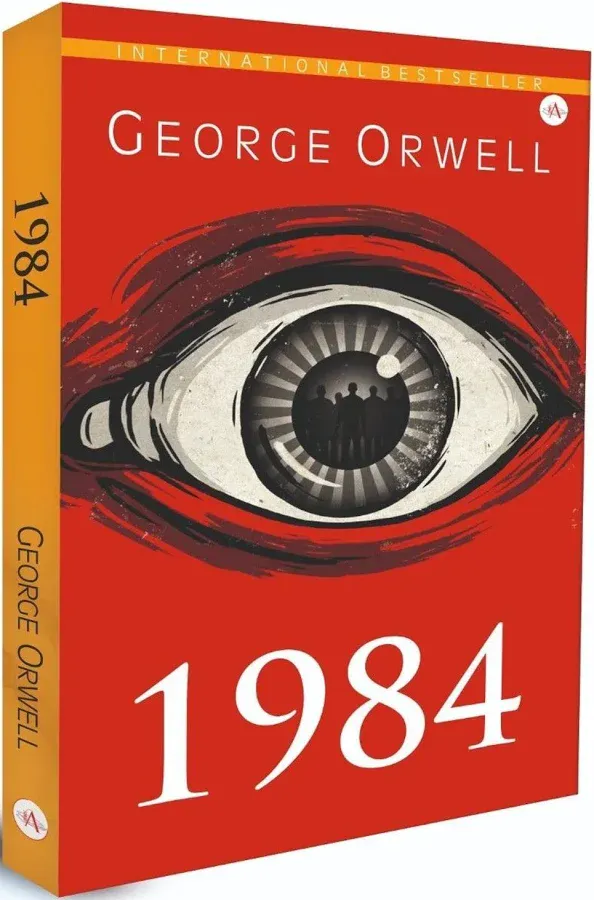
1. Book Information
- Title: 1984
- Author: George Orwell
- First Published: June 8, 1949
- Publisher: Secker & Warburg (Original Edition)
- Genre: Dystopian Fiction, Political Fiction, Science Fiction, Classic Literature
- Pages: Approximately 328 pages
- Reading Level: Intermediate
- Average Reading Time: 8–10 hours
- ISBN: 978-0451524935 (Signet Classics Edition)
2. Quick Summary
1984 is one of the most influential novels ever written and a defining work of dystopian fiction. Set in the fictional superstate of Oceania, the novel follows Winston Smith, a low-ranking government employee living under the oppressive rule of the Party, led by the mysterious figure known as Big Brother.
In this society, every aspect of life is monitored. Citizens are constantly watched through telescreens, independent thought is considered a crime, and history is rewritten to suit the Party’s agenda. Truth is manipulated, language is controlled through “Newspeak,” and even personal relationships are viewed as threats to political power.
Winston quietly rebels against the regime by questioning its authority and seeking truth in a world built on deception. His journey explores themes of freedom, surveillance, propaganda, censorship, love, memory, and the frightening consequences of absolute political control.
More than seventy years after its publication, 1984 remains remarkably relevant. Many of its ideas—mass surveillance, misinformation, political manipulation, and the erosion of privacy—continue to resonate in today’s digital age. It is not merely a story about dictatorship but a timeless warning about the dangers of unchecked power.
3. About the Author
George Orwell (1903–1950), born Eric Arthur Blair, was an English novelist, journalist, and essayist renowned for his sharp political commentary and commitment to social justice. His experiences during the Spanish Civil War and his observations of authoritarian governments heavily influenced his writing.
In addition to 1984, Orwell is celebrated for Animal Farm, another political allegory that critiques totalitarianism and the abuse of power.
4. What Makes This Book Special?
Few novels have influenced modern language and political thought as profoundly as 1984. Terms such as “Big Brother,” “Thought Police,” “Doublethink,” “Newspeak,” and “Room 101” have become part of everyday vocabulary.
Rather than predicting the future, Orwell explores timeless questions:
- What happens when governments control information?
- Can truth survive propaganda?
- How much privacy should individuals sacrifice for security?
- What makes us truly free?
The novel encourages readers to think critically about authority, media, and the value of independent thought.
5. Core Concept
The central message of the book is:
Freedom depends on the ability to think independently and seek truth, even when those in power attempt to control reality.
Orwell reminds readers that authoritarianism often begins with controlling information, language, and public perception.
6. Main Lessons from the Book
Lesson 1: Information Is Power
The Party constantly rewrites historical records to maintain control.
The novel demonstrates that whoever controls the past can influence how people understand the present and future.
Lesson 2: Freedom Begins with Independent Thinking
The Party fears independent thought more than physical rebellion.
Questioning accepted narratives becomes an act of courage.
Lesson 3: Language Shapes Reality
Through “Newspeak,” the government reduces vocabulary to limit people’s ability to think critically.
The book illustrates how language influences thought and public discourse.
Lesson 4: Fear Is a Powerful Tool
Rather than relying solely on violence, authoritarian systems often use fear, surveillance, and psychological manipulation to maintain obedience.
Lesson 5: Privacy Is Essential to Freedom
When every conversation, movement, and emotion is monitored, individuality begins to disappear.
The novel highlights why personal privacy remains fundamental to human dignity.
7. Best Chapters
Winston’s Secret Diary
Introduces Winston’s quiet rebellion and immediately draws readers into the oppressive world of Oceania.
Rating: ★★★★★
The Theory and Practice of Oligarchical Collectivism
Provides one of the novel’s most thought-provoking discussions on power and political control.
Rating: ★★★★★
Room 101
One of the most unforgettable and emotionally intense chapters in modern literature.
Rating: ★★★★★
The Ending
A shocking conclusion that forces readers to reflect on the true cost of absolute power.
Rating: ★★★★★
8. Practical Ideas You Can Apply Today
- Verify information from multiple credible sources.
- Develop critical thinking rather than accepting information at face value.
- Value freedom of expression and open discussion.
- Be aware of how language influences perception.
- Protect your digital privacy and personal data.
- Read diverse viewpoints before forming opinions.
9. Memorable Quotes
“Big Brother is Watching You.”
“Freedom is the freedom to say that two plus two make four.”
“Who controls the past controls the future. Who controls the present controls the past.”
10. Strengths
✅ Powerful political commentary
✅ Timeless and highly relevant themes
✅ Unforgettable world-building
✅ Thought-provoking ideas
✅ Influential literary masterpiece
✅ Encourages critical thinking
11. Weaknesses
- The atmosphere is intentionally bleak and emotionally intense.
- Some political discussions require careful attention.
- The pacing may feel slow for readers expecting constant action.
- Its themes can be unsettling because of their relevance.
12. Who Should Read This Book?
Ideal for:
- Students
- Political science enthusiasts
- Journalists
- History readers
- Technology professionals
- Philosophy readers
- Anyone interested in democracy, privacy, and freedom
Not ideal for:
- Readers seeking light-hearted fiction.
- Those looking for fast-paced adventure without philosophical themes.
13. Key Takeaways
- Freedom depends on truth.
- Independent thinking must be protected.
- Propaganda shapes public perception.
- Privacy is essential for individuality.
- Language influences how people understand reality.
- Absolute power threatens human freedom.
- Critical thinking is one of society’s greatest safeguards.
14. Overall Rating
| Category | Rating |
|---|---|
| Readability | ⭐⭐⭐⭐☆ (4.5/5) |
| Storytelling | ⭐⭐⭐⭐⭐ (5/5) |
| Political Insight | ⭐⭐⭐⭐⭐ (5/5) |
| Social Relevance | ⭐⭐⭐⭐⭐ (5/5) |
| Re-read Value | ⭐⭐⭐⭐⭐ (5/5) |
| Overall | ⭐⭐⭐⭐⭐ 5/5 |
15. Awards & Recognition
- Widely regarded as one of the greatest novels of the 20th century.
- Included in numerous “100 Books Everyone Should Read” lists.
- Frequently studied in schools and universities worldwide.
- Inspired countless films, television series, books, and political discussions.
- Terms like Big Brother, Newspeak, and Thought Police have entered everyday language.
16. Where to Buy
- Amazon India
- Penguin Books
- HarperCollins
- Barnes & Noble
- Bookshop.org
- Local independent bookstores
17. Similar Books You May Enjoy
If 1984 captivated you, consider reading:
- Animal Farm – George Orwell
- Brave New World – Aldous Huxley
- Fahrenheit 451 – Ray Bradbury
- The Handmaid’s Tale – Margaret Atwood
- We – Yevgeny Zamyatin
18. Final Verdict
1984 is more than a dystopian novel—it is a powerful examination of truth, freedom, and the consequences of unchecked authority. George Orwell’s vision continues to resonate because it addresses enduring questions about surveillance, censorship, misinformation, and individual liberty.
Although written in 1949, its themes remain strikingly relevant in the digital era, where information spreads instantly and debates around privacy and technology are more important than ever. The novel encourages readers to question assumptions, defend intellectual freedom, and appreciate the value of objective truth.
Whether you’re discovering it for the first time or revisiting it years later, 1984 remains one of the most important books ever written.
Euonia Press Rating: ⭐⭐⭐⭐⭐ 5/5 – A timeless literary masterpiece and one of the most important cautionary novels ever published.