Book Review of Rich Dad Poor Dad by Robert T. Kiyosaki
1. Book Information
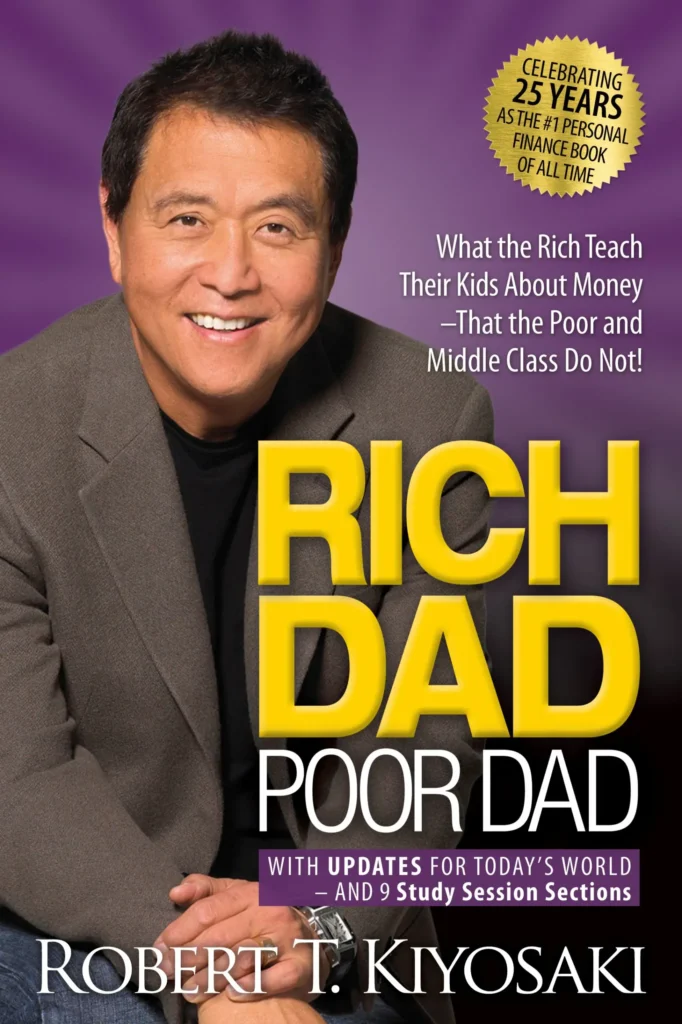
- Title: Rich Dad Poor Dad: What the Rich Teach Their Kids About Money That the Poor and Middle Class Do Not!
- Author: Robert T. Kiyosaki
- First Published: April 8, 1997
- Publisher: Plata Publishing (Current Editions)
- Genre: Personal Finance, Business, Investing, Self-Help
- Pages: Approximately 336 pages
- Reading Level: Beginner
- Average Reading Time: 6–8 hours
- ISBN: 978-1612681139 (20th Anniversary Edition)
2. Quick Summary
Rich Dad Poor Dad is one of the most influential personal finance books ever written, fundamentally changing how millions of people think about money, investing, and financial independence. Through the contrasting financial philosophies of two father figures—his highly educated but financially struggling “Poor Dad” (his biological father) and his entrepreneurial, financially successful “Rich Dad” (his friend’s father)—Robert Kiyosaki illustrates two very different approaches to wealth.
Rather than teaching readers how to earn more money, the book explains how money works and why financial education is often more valuable than formal education alone. Kiyosaki argues that many people spend their lives working for money, while financially successful individuals learn to make money work for them by acquiring income-generating assets.
The book introduces fundamental concepts such as the difference between assets and liabilities, the importance of investing, entrepreneurship, financial literacy, and developing multiple sources of income. Written in a conversational style with relatable examples, Rich Dad Poor Dad encourages readers to question traditional beliefs about careers, job security, debt, and wealth creation.
Although some of its advice has sparked debate among financial experts, the book remains a gateway into personal finance for millions of readers worldwide and continues to inspire people to take greater control of their financial future.
3. About the Author
Robert T. Kiyosaki is an American entrepreneur, investor, educator, and author best known for promoting financial literacy. Through his Rich Dad series, seminars, and educational programs, he has encouraged readers to think differently about money, investing, entrepreneurship, and passive income.
While some of his investment strategies and claims have generated controversy over the years, his work has undeniably influenced the global conversation around personal finance and wealth building.
4. What Makes This Book Special?
Unlike traditional finance books that focus on budgeting or saving money, Rich Dad Poor Dad challenges readers to rethink the very definition of wealth.
Kiyosaki emphasizes that becoming financially successful isn’t necessarily about earning a high salary—it is about understanding financial principles, investing wisely, and building assets that generate passive income.
The book’s simple storytelling approach makes complex financial concepts accessible even to readers with no background in investing.
5. Core Concept
The central message of the book is:
Financial freedom comes from building assets that generate income, rather than relying solely on a paycheck.
Kiyosaki believes that true wealth is created through financial education, disciplined investing, and entrepreneurial thinking.
6. Main Lessons from the Book
Lesson 1: Understand the Difference Between Assets and Liabilities
One of the book’s most famous principles is:
- Assets put money into your pocket.
- Liabilities take money out of your pocket.
Kiyosaki encourages readers to prioritize acquiring assets such as businesses, investments, rental properties, and dividend-producing stocks while being cautious about liabilities that create ongoing expenses.
Lesson 2: Financial Education Is Essential
Schools often teach students how to earn money but rarely teach them how to manage, invest, or grow it.
The author argues that understanding taxes, investments, debt, and cash flow is critical for long-term financial success.
Lesson 3: Make Money Work for You
Instead of exchanging time for money indefinitely, Kiyosaki advocates creating systems that generate income even when you’re not actively working.
Examples include:
- Rental properties
- Dividend-paying investments
- Businesses
- Royalties
- Intellectual property
Lesson 4: Don’t Let Fear Control Financial Decisions
Many people avoid investing because they fear losing money.
Kiyosaki argues that calculated risks and learning from mistakes are essential parts of building wealth.
Lesson 5: Think Like an Investor
Wealthy individuals often focus on acquiring assets before increasing their lifestyle expenses.
The book encourages readers to analyze opportunities, understand cash flow, and make informed financial decisions rather than emotional ones.
7. Best Chapters
Lesson One: The Rich Don’t Work for Money
Introduces the mindset shift from earning income through employment to creating financial independence.
Rating: ★★★★★
Lesson Two: Why Teach Financial Literacy?
Explains the importance of understanding assets, liabilities, and cash flow.
Rating: ★★★★★
Lesson Four: The History of Taxes
Explores how taxation and corporations influence personal wealth.
Rating: ★★★★☆
Lesson Six: Work to Learn—Don’t Work for Money
Encourages readers to develop diverse skills rather than focusing solely on salary.
Rating: ★★★★★
8. Practical Ideas You Can Apply Today
- Track your monthly income and expenses.
- Learn the difference between assets and liabilities.
- Read one personal finance book every month.
- Start investing regularly, even with small amounts.
- Build an emergency fund.
- Develop additional income streams through freelancing, investments, or side businesses.
- Improve your financial knowledge before making major investment decisions.
9. Memorable Quotes
“The poor and the middle class work for money. The rich have money work for them.”
“Financial freedom is available to those who learn about it and work for it.”
“It’s not how much money you make. It’s how much money you keep.”
10. Strengths
✅ Easy to understand for beginners
✅ Inspires financial independence
✅ Encourages entrepreneurial thinking
✅ Challenges traditional beliefs about money
✅ Introduces important financial concepts
✅ Motivates readers to improve financial literacy
11. Weaknesses
- Some examples are simplified and may not apply universally.
- The definition of “asset” differs from standard accounting principles.
- The book focuses more on mindset than step-by-step investing strategies.
- Some financial advice has been debated by economists and financial planners.
12. Who Should Read This Book?
Ideal for:
- Young professionals
- College students
- Entrepreneurs
- Small business owners
- Anyone beginning their personal finance journey
- Readers interested in investing and passive income
Not ideal for:
- Experienced investors seeking advanced investment techniques.
- Readers looking for detailed financial planning or retirement strategies.
13. Key Takeaways
- Financial education is more valuable than simply earning a high salary.
- Assets generate wealth; liabilities consume it.
- Passive income is a path toward financial independence.
- Invest in knowledge before investing money.
- Entrepreneurial thinking creates new opportunities.
- Long-term wealth requires discipline and patience.
- Money should be viewed as a tool rather than the ultimate goal.
14. Overall Rating
| Category | Rating |
|---|---|
| Readability | ⭐⭐⭐⭐⭐ (5/5) |
| Financial Education | ⭐⭐⭐⭐☆ (4.5/5) |
| Practical Value | ⭐⭐⭐⭐☆ (4.5/5) |
| Inspirational Value | ⭐⭐⭐⭐⭐ (5/5) |
| Re-read Value | ⭐⭐⭐⭐☆ (4.5/5) |
| Overall | ⭐⭐⭐⭐⭐ 4.7/5 |
15. Awards & Recognition
- One of the best-selling personal finance books of all time, with over 40 million copies sold worldwide.
- Translated into more than 50 languages.
- Featured on The New York Times Bestseller List.
- Frequently recommended as an introductory book for financial literacy and investing.
- Inspired the globally recognized Rich Dad educational series.
16. Where to Buy
- Amazon India
- Plata Publishing
- Barnes & Noble
- Bookshop.org
- Local independent bookstores
17. Similar Books You May Enjoy
If you enjoyed Rich Dad Poor Dad, you might also like:
- The Psychology of Money – Morgan Housel
- The Millionaire Next Door – Thomas J. Stanley & William D. Danko
- The Intelligent Investor – Benjamin Graham
- Your Money or Your Life – Vicki Robin & Joe Dominguez
- I Will Teach You to Be Rich – Ramit Sethi
18. Final Verdict
Rich Dad Poor Dad remains one of the most accessible and influential introductions to personal finance ever written. While some of its ideas have been debated, its greatest strength lies in changing the way readers think about money. Instead of viewing wealth as the result of a high-paying job alone, Robert Kiyosaki encourages readers to develop financial literacy, acquire income-producing assets, and adopt a long-term perspective on wealth creation.
The book should not be treated as a comprehensive investment manual, but rather as a mindset-changing introduction to financial education. Readers are encouraged to combine its lessons with additional research and sound financial planning before making investment decisions.
For anyone beginning their journey toward financial independence, Rich Dad Poor Dad is an engaging and thought-provoking starting point.
Euonia Press Rating: ⭐⭐⭐⭐⭐ 4.7/5 – A classic introduction to financial literacy that inspires readers to rethink money, investing, and wealth-building.