Book Review of Sapiens – A Brief History of Humankind by Yuval Noah Harari
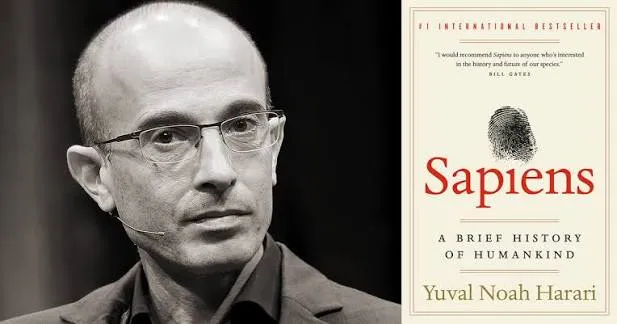
1. Book Information
- Title: Sapiens: A Brief History of Humankind
- Author: Yuval Noah Harari
- First Published: 2011 (Hebrew Edition)
- English Edition: 2014
- Publisher: Harper (HarperCollins)
- Genre: History, Anthropology, Sociology, Science, Non-fiction
- Pages: Approximately 464 pages
- Reading Level: Intermediate
- Average Reading Time: 10–14 hours
- ISBN: 978-0062316097
2. Quick Summary
Sapiens: A Brief History of Humankind is an ambitious exploration of the entire history of Homo sapiens—from the emergence of our species around 300,000 years ago to the technological revolutions shaping our future. Written by historian Yuval Noah Harari, the book blends anthropology, history, biology, economics, and philosophy into a compelling narrative that challenges many commonly held beliefs about civilization.
Harari argues that humans became the dominant species not because they were the strongest or fastest, but because they developed the unique ability to cooperate in large numbers through shared myths, stories, and beliefs. Concepts such as money, religion, nations, corporations, and human rights exist because millions of people collectively agree to believe in them.
The book is divided into four major revolutions: the Cognitive Revolution, the Agricultural Revolution, the Unification of Humankind, and the Scientific Revolution. Each section examines how these milestones transformed human societies, economies, cultures, and our relationship with the natural world.
Rather than simply recounting historical events, Sapiens encourages readers to question assumptions about progress, happiness, capitalism, religion, technology, and the future of humanity. It is a thought-provoking read that inspires curiosity and challenges readers to rethink what it truly means to be human.
3. About the Author
Yuval Noah Harari is an Israeli historian, philosopher, and professor at the Hebrew University of Jerusalem. He specializes in world history, military history, and macro-historical processes. Harari gained international recognition through Sapiens, followed by bestselling books such as Homo Deus and 21 Lessons for the 21st Century. His work has been translated into dozens of languages and is widely read by policymakers, business leaders, educators, and general readers.
4. What Makes This Book Special?
Most history books focus on civilizations, empires, or specific historical periods. Sapiens takes a much broader perspective, covering the entire journey of humanity over hundreds of thousands of years.
The book’s greatest strength lies in connecting seemingly unrelated subjects—biology, economics, psychology, politics, and culture—into one coherent story. Harari explains why modern society functions the way it does and challenges readers to examine whether technological and economic progress has truly made people happier.
It is not merely a history book; it is an invitation to question everything we think we know about human civilization.
5. Core Concept
The central message of the book is:
Humans dominate the world because they can create and collectively believe in shared stories.
Whether it is religion, money, democracy, corporations, or legal systems, these shared beliefs enable millions of strangers to cooperate on an unprecedented scale.
6. Main Lessons from the Book
Lesson 1: Stories Shape Civilizations
Harari argues that imagined realities—such as nations, currencies, laws, and corporations—are among humanity’s greatest inventions. These shared stories enable cooperation far beyond family or tribal groups.
Lesson 2: Intelligence Alone Didn’t Make Humans Successful
Many ancient human species were intelligent. What distinguished Homo sapiens was their ability to communicate complex ideas, share knowledge, and organize large communities around common beliefs.
Lesson 3: The Agricultural Revolution Was a Trade-Off
While agriculture allowed populations to grow and civilizations to flourish, it also introduced longer working hours, social inequality, disease, and dependence on crops. Harari controversially describes it as one of history’s greatest “traps.”
Lesson 4: Money Is Built on Trust
Money has value not because of the paper or metal itself, but because people collectively believe in its worth. This shared trust enables global trade and economic systems.
Lesson 5: Science and Curiosity Changed the World
The Scientific Revolution transformed humanity by encouraging people to admit what they did not know and seek evidence through observation and experimentation. This mindset accelerated innovation and reshaped societies.
7. Best Chapters
The Cognitive Revolution
Explains how language and imagination gave Homo sapiens an extraordinary evolutionary advantage.
Rating: ★★★★★
The Agricultural Revolution
Challenges the common belief that farming universally improved human life, presenting a balanced and thought-provoking perspective.
Rating: ★★★★★
The Scientific Revolution
Explores how curiosity, research, and technological progress transformed the modern world.
Rating: ★★★★★
Money, Empires, and Religion
Demonstrates how shared systems of belief unified people across cultures and continents.
Rating: ★★★★★
8. Practical Ideas You Can Apply Today
- Question assumptions instead of accepting them at face value.
- Learn from multiple disciplines rather than limiting yourself to one field.
- Recognize the influence of culture and shared beliefs on everyday decisions.
- Stay curious and embrace lifelong learning.
- Understand that many social systems are human creations and can evolve over time.
9. Memorable Quotes
“Culture tends to argue that it forbids only that which is unnatural. But from a biological perspective, nothing is unnatural.”
“Money is the most universal and most efficient system of mutual trust ever devised.”
“History is something that very few people have been doing while everyone else was ploughing fields and carrying water buckets.”
10. Strengths
✅ Comprehensive overview of human history
✅ Accessible writing despite complex topics
✅ Encourages critical thinking
✅ Connects history, science, economics, and philosophy
✅ Rich with fascinating examples and insights
✅ Sparks meaningful discussion about humanity’s future
11. Weaknesses
- Some arguments are speculative and debated by historians.
- The broad scope means certain topics are simplified.
- Readers looking for detailed historical analysis of specific events may find the coverage too general.
- Some chapters challenge deeply held beliefs, which may not appeal to every reader.
12. Who Should Read This Book?
Ideal for:
- History enthusiasts
- Students
- Educators
- Entrepreneurs
- Policy makers
- Scientists
- Readers interested in philosophy and anthropology
- Anyone curious about human civilization
Not ideal for:
- Readers seeking a traditional chronological history textbook.
- Those looking for light or purely entertaining reading.
13. Key Takeaways
- Human cooperation is built on shared beliefs.
- Culture and stories shape societies more than biology alone.
- Progress often comes with unexpected costs.
- Curiosity drives scientific and technological advancement.
- Understanding history helps us make better decisions about the future.
- Civilization is constantly evolving.
- Critical thinking is one of humanity’s greatest strengths.
14. Overall Rating
| Category | Rating |
|---|---|
| Readability | ⭐⭐⭐⭐☆ (4.5/5) |
| Historical Insight | ⭐⭐⭐⭐⭐ (5/5) |
| Originality | ⭐⭐⭐⭐⭐ (5/5) |
| Thought-Provoking Value | ⭐⭐⭐⭐⭐ (5/5) |
| Re-read Value | ⭐⭐⭐⭐⭐ (5/5) |
| Overall | ⭐⭐⭐⭐⭐ (4.9/5) |
15. Awards & Recognition
- International bestseller translated into more than 60 languages.
- Recommended by global business leaders, educators, and policymakers.
- Frequently featured on “Best Non-Fiction Books” and “Books That Will Change Your Thinking” lists.
- Widely used in university reading lists and discussion groups around the world.
16. Where to Buy
- Amazon India
- HarperCollins
- Barnes & Noble
- Bookshop.org
- Local independent bookstores
17. Final Verdict
Sapiens is not just a history book—it is a bold examination of how humanity became the world’s dominant species and where we might be heading next. Yuval Noah Harari presents complex ideas in an engaging, accessible style that encourages readers to rethink civilization, economics, religion, politics, and technology.
Whether you agree with every conclusion or not, the book succeeds in its greatest objective: making readers ask better questions about the past, present, and future. For anyone interested in understanding the forces that have shaped human society, Sapiens is an essential read.
Euonia Press Rating: ⭐⭐⭐⭐⭐ 4.9/5 – A groundbreaking exploration of human history that challenges conventional thinking and inspires lifelong curiosity.